
 Elias Saltz, Steve Gantner, David Stutzman
.png)
Why Door Hardware Is One of the Most Complex Parts of a Building
Most people walk through a doorway without giving it a second thought. Yet behind every opening is a surprising amount of engineering, coordination, and decision-making.
Door hardware isn't simply selecting a lock and a hinge. Every opening must satisfy security, life safety, accessibility, aesthetics, durability, owner preferences, and increasingly, electronic access control. It represents one of the most interconnected systems in a building, requiring coordination across architects, interior designers, security consultants, owners, manufacturers, and hardware specialists.
Every Door Tells a Different Story
Before a single hardware component can be selected, the project team must understand the door itself.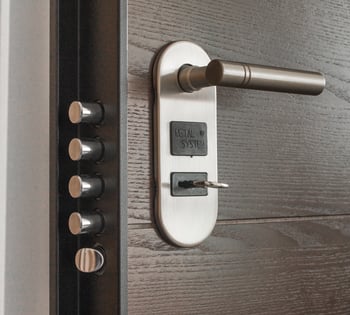
Questions that seem straightforward quickly become technical:
- What material is the door?
- How large and heavy is it?
- Is it fire-rated?
- How does it swing?
- Does it require accessibility or egress features?
- Is it part of a secure area?
Those answers determine everything from hinge type and quantity to lock functions, closers, seals, thresholds, and specialty hardware. Even something as seemingly simple as trim around an opening can change hinge selection and door operation.
Security Has Changed Everything
 The biggest shift in door hardware today is the rapid growth of electronic access control.
Card readers, wireless locks, monitored openings, and centralized security systems introduce another layer of coordination that extends well beyond traditional hardware schedules.
Owners may have branding requirements for hotel locks. Security consultants may specify particular access control systems. Manufacturers each have unique capabilities and limitations. One wireless lock may only be available with a single lever design that doesn't match the rest of the building, creating aesthetic and technical challenges that must be resolved long before construction begins.
Coordination Starts Earlier Than Most Teams Think
Writing the actual door hardware schedule cannot begin until floor plans, door numbering, schedules, and details are complete.
But the conversation should begin much earlier.
Early discussions allow the team to establish important project philosophies, including:
- Preferred lock types
- Facility standards
- Security strategy
- Maintenance preferences
- Electronic access control approach
- Consistency across existing facilities
Once these decisions are made, the detailed hardware specification becomes an exercise in implementing an agreed-upon strategy instead of redesigning it midway through construction documents.
Focus on Function, Not Products
One of the most valuable insights from experienced hardware specifiers is surprisingly simple:
Design teams should define what the door needs to accomplish, not necessarily which hardware device should accomplish it.
Rather than selecting specific closers, locks, or specialty devices, project teams should communicate the operational requirements:
- How should the door function?
- Who needs access?
- When should it remain locked or unlocked?
- What security monitoring is required?
- What aesthetic goals matter?
Hardware specialists can then coordinate compatible products that satisfy those requirements while ensuring every component works together as a complete system.
The Bigger Lesson
Door hardware illustrates a larger truth about construction documentation.
The challenge isn't simply documenting products. It's documenting intent.
When project teams establish functional goals early and allow specialists to coordinate the technical solutions, they reduce redesign, minimize conflicts during construction, and deliver openings that perform exactly as owners expect.
Like many aspects of building design, the best door hardware is the hardware no one notices, because it simply works.