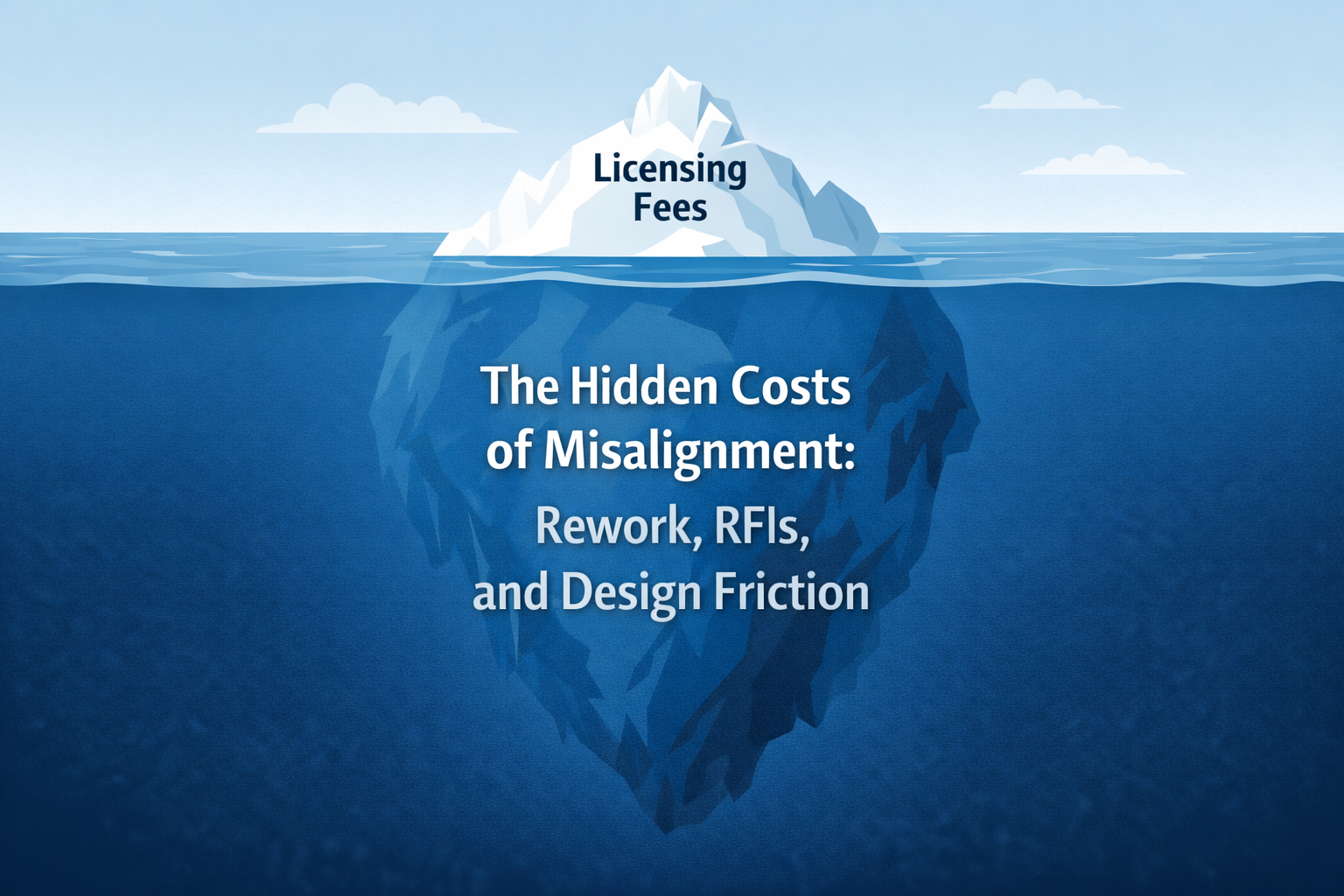
The conversation following my recent article has focused heavily on licensing.
That is understandable.
But licensing is not the central issue.
The central issue is alignment.
Do our documentation structures align with how buildings are designed?
Product-Based Organization
MASTERFORMAT® organizes documentation by work results:
- Concrete
- Steel
- Thermal insulation
- Air barriers
- Roofing
- Flashing
This structure is effective for:
- Trade bidding
- Subcontractor scope
- Cost breakdown
- Contract administration
But it requires identifying products early in order to assign section numbers.
System-Based Organization
System-based documentation, such as that structured under ASTM E1557, organizes by assemblies:
- Substructure
- Shell
- Interiors
- Services
Within those, systems are defined by performance.
An exterior wall is described as one integrated system — not fragmented across multiple sections.
This allows:
- Performance-first thinking
- Option analysis
- Iterative refinement
- Transparent substitution evaluation
Why This Matters in 2026
Design teams work in BIM environments. Assemblies are modeled as systems. Energy analysis evaluates envelope performance holistically. Owners demand lifecycle performance.
Yet our specification structures still assume product and trade silos.
There is a structural misalignment between how we model buildings and how we document them.
The Real Cost of Misalignment
The cost is not licensing.
The cost is:
- Rework during design
- Fragmented documentation
- Defensive value engineering
- Increased RFIs
- Loss of intent clarity
These are hidden costs.
They exceed licensing fees by orders of magnitude.
A Possible Hybrid Path
This is not an argument to eliminate MASTERFORMAT® entirely.
A practical approach may be:
- Develop System & Performance Descriptions during concept through design development and into construction documents.
- Lock in system intent.
- Translate final selections into MASTERFORMAT® construction documents when appropriate.
That sequence aligns documentation with design progression.
The Larger Opportunity
The current licensing controversy may fade.
But the underlying question will remain:
Are we organizing information for how buildings are constructed —
or for how they are conceived, evaluated, and defended?
If we want fewer RFIs, fewer VE proposals, and clearer accountability, we must make design intent explicit at the system level.
The structure we choose either clarifies intent — or obscures it.
That is the real debate.

 David Stutzman