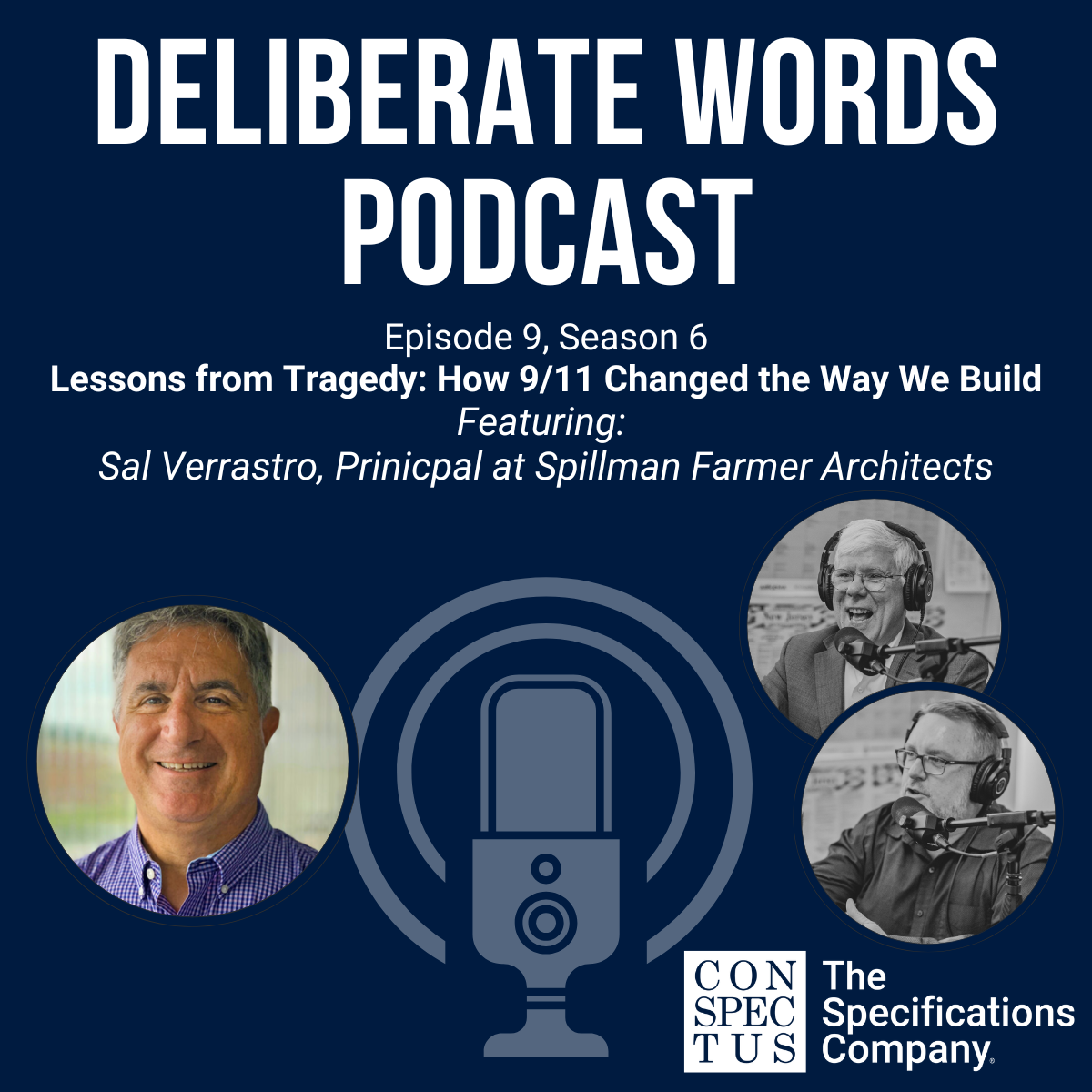
In this episode of Deliberate Words, hosts Steve and Dave welcome architect, specifier, and industry leader Sal Verrastro for a wide-ranging discussion on how major building disasters have shaped modern design practice, building codes, and risk management.
The conversation begins with a technical examination of the World Trade Center collapse and the lessons learned from the September 11 attacks. Sal shares insights into the structural and fire-protection factors that contributed to the collapse, including the loss of spray-applied fireproofing, the effects of prolonged fire exposure on structural steel, and the extensive investigations that led to significant code changes. The group explores how these findings influenced modern requirements for fireproofing, sprinkler system redundancy, stairwell design, and photoluminescent egress markings in high-rise buildings.
The discussion expands to other notable building failures, including the Grenfell Tower fire and the Hyatt Regency walkway collapse, highlighting how forensic investigations often uncover seemingly small design, coordination, or construction decisions that can have major consequences. The hosts emphasize the importance of learning from failures and how these events continue to influence standards, regulations, and professional practice.
Sal also offers a behind-the-scenes look at his work as an expert witness, explaining how forensic investigations reveal valuable lessons about coordination, documentation, liability, and risk management. He shares why he chooses particular cases and how those experiences inform his work as a design professional.
The episode concludes with a forward-looking conversation about Building Information Modeling (BIM), digital project delivery, and the challenges of defining responsibility in increasingly collaborative project environments. Sal, Steve, and Dave explore concerns around model ownership, contractor reliance on BIM data, design-build delivery methods, and upcoming changes to AIA contract documents.
Key Topics
- Structural and fire protection lessons from 9/11
- Evolution of high-rise building codes
- Fireproofing materials and performance requirements
- Stairwell, sprinkler, and emergency egress improvements
- Grenfell Tower and facade fire safety
- Expert witness investigations and forensic architecture
- BIM coordination, model liability, and risk management
- Design-build project delivery
- Emerging AIA contract and documentation updates
Takeaway: Major failures and disasters often become catalysts for innovation. From fire safety and structural design to BIM workflows and project delivery, the profession continues to evolve by studying what went wrong and applying those lessons to create safer, more resilient buildings.

 David Stutzman + Steve Gantner